Surviving Liminal Space

This sermon was delivered at St. Michael’s and All Angels on Sunday, September 26, 2021. You can watch it here. I preached way longer than anticipated, but you know it’s ok.

To say that it has been difficult to write this sermon is an understatement. While I am so grateful to my friend and pastor Rev. Julie for the opportunity to be here with you all.  There is a part of me that believes this may have been a trick on her part to get out of preaching some difficult texts. While there are few words there is so much content so I offer you two sermons:

Sermon #1

Every time a reading from Revelation comes up, I want to get on the soap box about how this is not a predictive text, but a revolutionary one. Oppressed colonized people telling a story where the colonizer is defeated. The evil that Michael overthrows is not merely about individual sin, it is about the communal sin of power over! Revelation is about justice against those who have decided that their power is greater than Gods. And it says that God has the last word through the use of God’s army or God’s posse: Angels. Those beings that seem to live in the celestial plain, but have access to go between. Now that I have proven that I really did graduate from Union, we can go to sermon 2.

Sermon #2 (Just a tad bit longer)

If I might be honest I am overwhelmingly tired. And this exhaustion cannot be cured with more hours of sleep. My day job at Episcopal Relief & Development is in the US Disaster Program and if you haven’t noticed, we have been experiencing a few too many disasters at the same time lately: pandemic, hurricanes, floods, sacadas, fires, border/immigration/refugee crisis, earthquakes, economic crisis, ooh and the racism – can’t forget the racism. Plus as an adult – I am supposed to get up each morning, bath, cloth and feed myself while caring about humanity. And as I look around at even my most strong, most spiritually grounded, blessed friends, I feel the sadness and grief radiating from all of us. In normal times it would be one or two of us having a bad day and so the community could rise up and help the other out the hole. You know that story about a person in a hole and they can’t get out, a friend comes along and the person screams up and says, help! The friend jumps in the hole and the person says, “now we are both stuck down here.” And the friend replies, “yeah but I have been here before and I know the way out. 

Friends – have any of you been here before? and do you know the way out? Where is a good ladder filled with Angels ascending and descending when you need it. How do we survive this time so that we can be the friend of the metaphorical future who knows the way out? In preparation, I read the Presiding Bishop’s sermon on these same texts. He spoke about liminal space. On my regular Sunday Mornings, I listen to Gospel songs that testify to how God got them over because Won’t he do it. This morning as I listened to Marvin Sapp sing, “never would’ve made it without you.” I realized that most testimony is glorification of what God has done or will do. But rarely to do spend much time focusing on that place between, the liminal space. My friend Makeda Pennycooke describes it as the place between what was and what is not yet. And so this is where we will focus our energy today – the in between where little certainty exists. In a recent interview with Nadia Boltz Weber, the public priest for the Evangelical Lutheran church in America or the ECLA. She said that we are all working from a baseline of grief. And so with the permission to work from a place of grief, we go back to the text.

In our Hebrew scripture reading we hear the story of Jacob going from Beer-sheba to Haran. But he stops in a place with no name and dreams of a ladder between heaven and earth where Angels are going up and down. It is clear that the ladder must mean something because as we know from the TV show Luther Angels have wings for moving about. What the ladder seems to emphasize is that this place is an in-between place, a liminal place. It is between where he was and where he is not yet. And the text says,” he was afraid, and said, ‘How awesome is this place! This is none other than the house of God, and this is the gate of heaven.’” Now I don’t know about you, but my natural response to fear and uncertainty isn’t “How awesome!” It does not make me think that God is there or that it is the gate to heaven. And yet, this is exactly what we are being invited to explore. 

In the past couple months as we work our way back to what they call the “new normal,” there has been great grief. Many believed that as soon as the church doors opened, people would flood back, trying to get back to the way things were before. Longing for physical connection with others. And while there are many that have returned, there are far more who have realized that online church ain’t that bad and that there are so many ways they can experience the holy. Even more frightening is that many have realized that perhaps where they worship does not feel like the house of God. Instead of racing back, they are racing away and realizing why younger generations had given up on Sunday worship. While I feel like I am living in a liminal space personally, it is also clear to me as outlined in Bishop Curry’s sermon that we are in a liminal space institutionally. For some of us, instead of laying down to dream and listen to God’s voice, we are trying to figure out clever ways to get back to a church that existed in a different time and a different place for a different set of people. 

I can even tell stories about the glory days of my childhood church, St. Paul’s Episcopal Church in the Village of Flatbush, when there were over 200 children in the Sunday School and acolytes and a youth choir and everything was amazing. And for my faith formation those were glory days. But that is what was and God is inviting us into what is not yet. When Jesus says to Nathaniel you will see greater things than these, we must believe him! But it is hard to believe in liminal space, it’s the valley of the shadow of death and I am fearing all the evil, it is hard to believe in greater things to imagine that you will get to what is not yet. It is hard to battle forward when you have no idea what you are working to achieve and yet! That is what I feel we are being called to, not only as individuals but as Church. We are being called to trust God and know that even in this inbetween frightening space when church building will close, congregations will consolidate, budgets will get tight and disasters will continue to come that God is in this place too, that not only is God in this place, but this very frightening, grief filled, difficult place might be the house of God, might be the gate to heaven. That this liminal place might be Awesome!

As Christians, if we believe that our houses of worship are a house of God, then we must understand it also as a liminal space an in-between space between what was and what is not yet. If you need a good word for today, ponder this with me… What if right now is awesome – it don’t feel good, it sure isn’t comfortable, in fact this liminal space has been anxiety producing, overwhelming and we have all experienced moments that felt like spiritual warfare. In spite of all this our scriptures are asking us to believe that even in this, God has dominion. Even this is awesome and it is from here that we will find the gates of Heaven.

As an educator, it seems unfair to offer theory without tools. And so I want to offer three using a bit of story/metaphor:

  1. For several years I worked in Vermont as a student affairs professional. After four years,  I was having a hard time discerning priesthood, trying to find a job and answer very big life questions. I wanted to come back home to Brooklyn. One day I laid on my friend’s couch and wept. Her dog Lucia, who recently died, walked over to me, looked me in the face, raised her paw and laid it on my lap. Now maybe she just wanted her armpit scratched, but I have never felt more seen. A dog with no words let me know that I was not alone in this liminal space. She didn’t try to fix me or change me or tell me something about manifestation and gratitude. Lucia merely offered me her loving presence and affirmation that it was ok to grieve.
  2. In the early days of the pandemic as I grieved lives lost and walked through a silent city, I listened to the song Let Go, Let God. The lyrics go = As soon as I start worrying, worrying how the story ends, I let Go and I Let God, let God have God’s way. I once had a therapist who would always try to get me to engage in mindfulness practice, to let go of outcomes and expectations. Anyone who knows me, knows that this continues to be a large ask. But letting Go and knowing that God is right there trying to help me along the way has continually yielded better results for me than trying to tell God what I think should happen. Because when we let go of what we wish our life to be, God invades our imaginative possibilities and shows us greater things than this.
  3. In my last semester of seminary, I took a class on Bible and trauma. We would often joke about the Gospel song, We fall down. It goes like this: we fall down, but we get up. However as we dug into the troupe of the “suffering servant” and reflected on the difficulties of being quarantined while studying theology we would change the lyrics: We fall down and take a nap. To rest more is not an invitation to a physical requirement, but an invitation into those things that actually fill up your tank and rejuvenate your life. Or an invitation into doing and caring about absolutely nothing if even for a little while. There is a prayer in the Book of Common Prayer, pg. 461 that with modifications goes: this is another day, we know not what it will bring forth, but make us ready for whatever it may be. If we are to stand up, help us to stand bravely. If we are to sit still, help us to sit quietly. If we are to lie low, help us do it patiently. And if we are to do nothing, let us do it gallantly. Make these words more than words and give us the spirit of Jesus.

In review, if you want to survive the liminal space try using these three tools: Tool 1: allow space for real grieving to happen perhaps with a dog or another person/group who won’t try to immediately fix it. Tool 2: Let Go and let God. Be present to the now. and Tool 3: Do nothing, gallantly – Take a nap.

Church folks keep trying to figure out the secret to getting people under 50 into pews on Sunday morning.  If you lean in real close I will tell you the hack……

Stop asking us to join committees and just hold space for us to navigate the liminal places of life. The space between what was and what is not yet. On this day, your patronal festival, remember that this is a house of God, the gate of heaven, an Awesome place. It is not heaven, it is not a destination, but a place between – a liminal space. 

Because here is the trick, liminal space as defined as the places between what was and what is not yet, means we are almost always in liminal space. We are never not in the house of God, never not at the gates of heaven. We may have no clue what the right answers are, but we might know the right, next best step (theology of Frozen II). We might be able to  ask some really good questions and trust that God is working it out through us together. We might be utterly afraid, and yet God. As grief continues to be our baseline let us allow the water to come out of our eyes and hearts to be broken and rest to come  for what was and the longing for what is not yet. Because it just may be awesome! And it just may be preparing us for a time when we will experience much greater things than this.

Amen.

Where is Church? The role of Public Priesthood.

Since graduation this blog and website has become a way for me to continue exploring the questions I started to investigate in seminary. As a part of this process, I have been looking back at past posts. As I reviewed them, I realized that not only have I been wondering what is the church, but where is the church? I have been questioning what we mean by communities of God for my whole life and it affected the way that I understood my ministry. Here is an excerpt from my thesis that explores the role of the Public priesthood. It assumes a new way of imagining not only the role of the priest, but what we understand as and where we see the Church.


The limitation of academic positions has made the role of Public Theologian necessary. Graduate theologians have had to figure out ways to share their acumen and maintain financial stability. Therefore the role of Public theologian comes out of economic necessity and a deep ceded desire to make theology accessible. The role of the Public theologian is to bring theological insight to the masses. Priests are experiencing similar limitations in the traditional congregational context. The Public priest would bring sacramental life to the masses. Many may see this proposed role as similar to that of deacon or chaplaincy. However the deacon is really a bridge between the church and the world and chaplains often are formed out of the same ordination processes that limit ministerial imagination. What I propose is an ecclesiastical role that recognizes the church as the world. The goal isn’t to fill pews and buildings. Rather, the role is to recognize the incarnational in the world and participate with it through sacramental life, administered by the Public Priest.

According to Brown and Cocksworth, “there is no such thing as an ‘absolute ordination,’ a conferral of position in the Church abstracted from the realities of service within a local community of Christians.”[1] However, we must problematize what we mean by “local.” Many priests are ordained in one context and yet end up serving in completely different locations. And there are others who serve in spaces that are not predominantly Christian. These examples mean that we may already be a church of “absolute ordination,” we just need to embrace it! Such an embrace does not mean that everyone will be ordained or that public priests would not be held accountable by a community. This role would have accountability to the denomination, but freedom to discern out of a variety of contexts.

We must deal with the reality that our concepts of church, community, and local have been problematized by technology, economics, pandemic and migration. From my apartment in Brooklyn, I could go to bible study in Jamaica, Sunday Morning service in Washington, DC and evening prayer at a camp in Connecticut. Most of my friends don’t go to church at all, even those employed by it. My spiritual, but not religious friends have made me their default chaplain because I publicly say I’m Christian. When they are having crises or a desire for rituals to mark life’s important moments, they ask me to help. I have moved often for work and these friends live throughout the country. This displaced group of friends feels like my church community. Additionally, those disillusioned by church limitations are realizing that they don’t have to enter particular doors to experience God’s belovedness. This is particularly true for those engaged in social change movements.

Patrisse Khan-Cullors is known as a leader in the #BlackLivesMatter movement. Her memoir offers theological insights into how we might understand Public priests. In her story we see the ways that various community groups, educational institutions and friend networks provided space for her to develop lifegiving God-talk. Her description of family barbeques sounded like the parish picnics of my childhood. The ways that her chosen family shows up for each other is similar to the ways that I access my community of care that is rooted in the church. Most touching are the stories about her relationship with her biological father: “In a world that has made Black humanity invisible, I feel seen in a way that is almost shocking.”[2] As she talks about organizing her father’s funeral, it is “the first time I have ever called community together to acknowledge a life.”[3] And it will not be her last.

These seemingly secular spaces become training grounds for Khan-Cullors like church basements had been for John Lewis. While today’s leaders often say, “this is not your grandmother’s civil rights movement,” in many ways it is. Instead of church basements its non-profits (and it is also church basements). Instead of hymns like “we shall overcome,” it is Kendrick Lamar’s “we goin’ be alright.” At the root of modern movements and those that came before is a theological center on the beloved worthiness of those who have been deemed unworthy by institutional structures and from those who benefit from the existence of such structures. The Episcopal Church has been on a journey to correct their involvement and support of oppression and we are doing so by developing God-vision when we move through our communities. One possible tool to help in this process is Public Priesthood.

This past summer I swam in some of my favorite New Hampshire watering holes, it was an opportunity to remember what was written in my rejection letter from the Commission on Ministry so many years ago, “the ministry to which you feel called is not one priesthood would prepare you for.” They told me to come back in ten years. I read the letter as code for, “go grow up and figure out what priesthood is really about.” Almost ten years later,  they may be right.

The structures that currently exist were not created for people like me and how I understood my priestly call. While there are generations of priests that understand their ministry in “the streets” there are others for whom church polity and ritual is their ministry. I am not proposing either/or, I am Episcopalian, I am proposing both/and. The stories of the women I interviewed speak to ways that Church tradition has something to do with social change and that social change has something to say to our tradition. According to Spellers, “Anglicanism can and should always balance the ancient and the contemporary, the catholic and the vernacular. We call this middle way, the via media, and it allows us to rejoice in having unity without uniformity.”[4]

What happens in ordination processes matters because who we call as leadership matters. The work we have to do is not just about policy and structure. People are crying out for love, attention, support and caring presence. Our work, as the church, should be where “the Word of God gathers and is incarnated in the community of faith, which gives itself to the service of all.”[5] The Church exists to participate in “the fullness of liberation,” which is “communion with God,…other human beings,” and the rest of creation.[6] The church is being called into forming leadership that can support communities where true liberation can be practiced, where true liberation can happen. Thanks be to God. Alleluia, Alleluia!


[1] On being a priest, 21. Emphasis mine.

[2] Khan-cullor, pg. 95. We can see the parallel between these words and the ways that Bishop Emma spoke about her Black church experience growing up in the 50’s and 60’s.

[3] Ibid, 106.

[4]  Spellers, The Church Cracked Open, 57.

[5]Gutiérrez, 7.

[6] Gustavo Gutiérrez, A Theology of Liberation: History, Politics, and Salvation (Maryknoll, N.Y: Orbis Books, 1988), 24.

What is Church? Pt. 1

Tamara looking at the camera with happy eyes, perfectly done eyebrows, and a mask. She is holding Baby Elio.

The large question I think many of us have been facing is where do we find the Holy or get connected with the divine? For most of my life my “Holy Place” was Church. In the past year, many churches had to close their Sunday morning worship doors to keep folks safe. But long before the pandemic, I stopped attending Sunday Morning worship. Instead I opted for the 30-45 minute Eucharist option of week day services. There are many reasons for this, but what I think it comes down to is that I stopped experiencing the Holy in the Sunday Morning ritual and realized that there are many places where we encounter the divine.

No disrespect to those I worshipped with, but Church felt like work in ways that weren’t life giving. There were requests to join committees or run some ministry that didn’t match my skills. As an event planner, I was never asked by a congregation I attended to plan an event, even when I volunteered. However, I was repeatedly asked to teach Sunday School or the lead the youth group… Those who know me, know that is not my ministry. The elder teatime/Bible Study group – totally in my wheelhouse. But I digress. The sermons were fine, the music was fine, the people were great, but I struggled with the contradictions of sitting in an opulent building that rarely opened its doors during the week for “non-worship” activities.

As I left church and joined friends for brunch or watched folks gather for protests or took a walk through the park, my connection to the divine is engaged. There are three recent Eucharist experiences I had that have just reinforced for me that gathering on Sunday morning is not really my jam.

  1. I came out of the subway in midtown and walk past the unhoused as they start the morning rituals many of us engage: coffee, personal hygiene, planning the day, etc…. As I arrive at the beautiful edifice of this Church I know does a great deal of homeless ministry and a large endowment, I couldn’t help but feel the contradictions in my veins. The church was still closed because of the pandemic, but as a friend of the preacher, I was allowed to show up and participate in the live stream recording from the sanctuary. Visually it was beautiful, the sermon was great, the music enticing and familiar. But I felt cold and confused. How could I not see this asset and resource and wonder what Jesus would say if he had just taken the same walk I did from the streets to the “Church?”

    This is no disrespect to the church. Their hospitality was lovely, everyone was kind and loving. But I couldn’t take my mind off those who were not allowed through the doors.
  2. My friend invited me to Vermont to be a part of the birthing event. It was amazing and transformational (definitely not having a kid now though). She was due on the Thursday when I arrived in town, but on Sunday when I woke up, there was still no baby or contractions. I scrolled around to see if there was a service I could attend. The cathedral (I attended the parish when I lived in VT from 2006-2010) was having one of its first gatherings since the pandemic began. As I drove up nervous that I wouldn’t be allowed in, my sense of fear was assuaged with welcoming faces that invited me to add my name for contract tracing purposes. We sat outside, distanced with masks on. It was humble and welcoming and warm. Perhaps it is because it was a group of us and community singing is healing. Perhaps it was seeing they eyes of folks who helped spiritually raise me or something else… But it felt good to be there, to be hugged and to know that the sanctuary that remained closed to worship was opened to a clinic that took place each Friday for BIPOC folks to get trusted medical care.
  3. My music camp friends were house-sitting next door to Apple Hill Center for Chamber Music. For me this property is thin space (a term I learned from Paulo Coelho). Thin Space are those places where you can feel the conflation of the temporal and transcendent. You can feel it in your bones when you are in this kind of holy space. I spent a week with my friends of 20 years. During our eight days together we hosted four – eight person meals. Even from our first evening together as we sat down, I said grace. It was an overwhelming feeling that we were doing something holy and needed to honor and recognize that. I don’t usually say grace… I assume God knows I am grateful. Each meal and conversation and gathering felt blessed and Holy. One of my friends doesn’t even believe in God, but he is the best Christian I know.

What to take from these three experiences is something that I have been hearing from friends, colleagues, and acquaintances for a while now: Church isn’t where I meet God. And that breaks my heart. But I totally understand and I often agree. There are a couple of places to go from here… What do we mean by Church and why does it matter? What might the church learn from the world and how do we see the church as the world? What would it take for Church to feel like Church again or Where are folks meeting God and how can the Church show up there? Do they need to show up?

Seminary

I have just graduated with a Masters of Theology. I started this blog a long time ago so that I could process the call experience. I haven’t kept up with it. So here is my trying to do better. I did a lot of academic work processing my spiritual life through course work. I hope to go back and use some of these papers to highlight what I have learned and the new questions I have about all of it. Let’s get started. Here is the statement of purpose when I entered seminary. Next time – I will reflect a bit on this statement and what happened.

Picture this – Summer 2009, I am sitting on a rock in the middle of Center Pond. The sky is that light blue of fake movie sets. The clouds are puffy and soft, pushed by the gentle breeze that causes a soft ripple on the water’s surface. The sun hits my skin like a warm hug from the creator. Across the way there are sheep eating the greenest grass, the utterance of a few bahhhhhhh’s enhances this perfect moment. Reluctantly, I jump into the cold New Hampshire waters of early summer, surrendering to God’s call for my life. Back at music camp, I play pieces that transformed my heart and unlocked a place of resistance to the ways the Holy Spirit had been calling. I was destined for a long journey, but I was sure that this journey would lead to ordained ministry in the Episcopal Church: Baptizing, celebrating the Eucharist, proclaiming the Gospel and forming disciples. 

I began my discernment process in Vermont, but moved home to Brooklyn and pursued the ordination process in the Diocese of Long Island. By the fall of 2012, I received a rejection letter, “the ministry to which you feel called is not one the priesthood would prepare you for.” While devastated, I stayed invested in the church. “If it’s not priesthood, then what?” I would scream at Jesus in my prayers because me and God were not on speaking terms. The response, “remember when you surrendered, yeah well, this is surrender.” 

Thankfully, the Holy Spirit spoke quickly. I came in contact with leaders in the church that would guide me on a path of discovery. This process would challenge my imagined, perfectly paved road to reach God’s call. Canon Myra Garnes, Director of Youth and Young Adult Ministries in the Diocese of Long Island gave me space to explore what lay leadership could look like. We worked together to design learning experiences that allowed young people to explore and utilize their voice. We pushed their comfort zones and engaged them in difficult conversations about faith’s impact on race, gender, and sexuality. These were mostly children of Caribbean immigrants who had been told that good behavior was silent behavior. While my strength is not Youth Ministry, it was a significant step in melding my professional life with my faith practice. 

The second leader that I worked with was the Rev. Canon Stephanie Spellers. Her book Radical Welcome combined my two seemingly disparate worlds into a cohesive expression of Christ’s love: social justice and religious practice. It codified how the church could walk with and be transformed by those on the margins. In my professional life at the University of Vermont, I often hid the religious understandings that compelled me to engage in justice oriented projects. But this book sparked a transformation for me to push myself and my community. I was better able to engage my “disillusioned by religion” friends as they joined me for worship and

conversations about the relevance of our rituals and ceremonies in creating God’s dream of equity and inclusion. But it also pushed me to challenge my church friends to go beyond the routines of worship and club membership. 

Canon Spellers’ invitation to join the Ministry Development Committee allowed me to co-create curriculum that further integrated my professional skills with my religion. I was able to utilize my skills as a facilitator, advisor and educator for congregational development and formation. It is through these experiences that I have landed on my current professional role. I now work with Episcopalians as they respond to needs of neighbors after a disaster. In particular, we focus on the needs of those that fall through the crack of traditional disaster response systems. So here I am sitting in one of many hotel rooms I have been in this year writing a personal statement for Union Theological Seminary’s Masters in Theology, with a concentration in practical theology: church/religion and society. I believe that it is the right time in my life to incorporate formalized education in theology with my practical experiences in supporting the church as it builds itself into a space of true healing for our world. 

It is time for me to step into my full potential, be challenged in a rigorous academic environment, and formulate the theological skills to go beyond the informal theories of change that I have developed in my personal and professional engagement with the church. It is time for leaders, like me, to go beyond being interesting and implement institutional changes that allow the church to live into Christ’s call for us. We must use the Master’s tools to destroy the Master’s house and recycle the leftover materials for a new thing. 

I believe study at Union will transform my personal faith practice and open my heart to discovery by finding joy in the winding unpaved nature of following Jesus. My hope is that it will push me to be a better professional by challenging my comfort zones and grounding my lived experience in theological and biblical history. What I desire most is intentional and structured time to learn and deepen my understanding of God and the impact of religious communities in building a more equitable world. Seminary will give me this space to explore the various professional opportunities that tap into my gift of supporting leaders as they discern, strategize and implement God’s vision for our world. I seek to join seminary to learn, grow and be transformed so that I am better equipped to teach, advise and support safe spaces of institutional transformation.

Sweaty Menopausal Woman

Here is a sample of my writing from a summer at the writing workshop at Sonad. This summer I will have the opportunity to run this workshop. I invite all who want to explore their writing from a musical perspective to join us this summer. You can learn more about the Summer Writing project and how to sign up by going here.

What you need to know about me: I’m a bassoonist and so a musician. Words and writing for me have always been about how words sound: the meter, the rhythm. We will explore the writings of those who celebrate and best demonstrate the ways that words describe our deepest expressions of self, how the performance can be reflected in the written word and most importantly have fun sharing our voice through text!

THE PIECE FROM 2014

Sweaty, menopausal woman. Shift. The shift of the eyes. Beads stream gently from her wig. Bulky clothes radiating heat on this a rush hour train. To sit next to her is to sweat too. She radiates heat. A pulsating heat that crinkles as she works through each bag to find her things: glasses, bible, handkerchief (sweat rag). For she is a lady. A true lady. A true bag lady that moves through this planet with distinction. She knows from whence she came and where she is to travel.

We all sweat, but she sweats. Bags, many bags, all organized bags. One overly used Sephora bag holds her bible and prayer materials. The eyes that tracked her surroundings now move rapidly on the page. With each line she shifts, she dabs. She dabs the sweat, gently, no makeup disturbed by the sweat, the water pouring. I watch her each morning, thinking she is in her own world.

Upon my return to a rush hour train one semester away.

“Where you been?” she says in that lullaby of a woman not born  Still dabbing, make-up and uniform and bulky winter gear and the same plastic Sephora bag.

“College, I went to college.”
“Oh, that’s so nice. Good for you, CONGRATULATIONS!”

It’s the last time I see the streams, the plastic bag, the well postured, plump nurse with the large breasts. Looking, judging, taking notice. I know that I will become this for someone, someday. For so goes the pace of the city. But as she returns to her reading glasses and bible I wonder what would happen if I ripped off the wig. Would her sweat dissipate? Would she no longer need to dab? What would she do for the hour? How would she keep herself occupied? What would I call her? No longer sweaty menopausal woman, something else? Grandma, Mama, aunty in that singsong accent of the caribbean where our few words are a melody remembered long after the composer has past.

We, the children, are their melodies in motion. We, their children, return to remember from whence we came. We, their children, will honor them by dabbing when menopause comes. We, their children, will too find comfort in shifting eyes across pages. We, their children, will long for the days when sweat radiated and warmed us all 365 days a year.

What’s Adulthood?

There is a moment when a woman carries another human, fills out paperwork or does a number of other things to become a mom. There seems to be something about this moment that changes a person. This is a moment when many see this female go from girl to woman to mom. She is instantly seen as an adult.

There is another moment, when a woman finds a partner, exchanges rings or moves in with a person that she thinks she might spend the rest of her life with. At this moment, people go from being single to partnered to woman, grown up.

Even in this modern day, having a child or being partnered is a litmus for adulthood. But as a single woman, no kids, no prospects for life long partnership and 40 looking back at me am I an adult? Will the world ever see single women with no children as adults before they get old. Like wrinkles, grey headed old. What makes a woman look an adult to others? To themselves?

Today I started going through a pile of papers that I routinely move from one location in my apartment to another. My favorite find, my L&T final portfolio. I stumbled on an “essay” about my arrival at Bard. In the piece, I describe a conversation/argument between my mother and aunt as I stopped at security to pick up keys for my room, “Let her do it. No, she needs help. Let her do it, she has to learn to do things by herself. No, she needs help, she’s not doing it right.” I don’t know who at the end of the day was really right, I probably chose my mom’s side. I am Jennifer’s daughter after all. But I digress. 19 years later, I am in an apartment where I pay all the bills, am in charge of my personal care, employed, degreed, independent, payer of taxes, coordinating my entertainment, building friendships, engaging in relationships, spiritually mature, etc…

By all accounts, I am an adult and yet, at times, I don’t feel that way. There are those who have known me my whole life, and at times I think they see me as my childhood self. There are those moments, when I look into the mirror and wonder who is this person looking back at me. What is strange is, I don’t think I am the only one. My current position has me working with many over the age of 50, and they often say similar things. They feel like their 20 year old self, but their bodies don’t cooperate anymore. Most of these folks have children, even grandchildren. What is it about our humanity that splits our perceived age with our real age? Does age, marital status, or parenthood indicate our adulthood status?

There are several men I know that seek to elongate their bachelor status. They seek to be seen as a “man” and yet spend little time engaging in relationships that are mature or long lasting. Their goal is fun, enjoyment, “chilling” is what they have to offer. Many of my single friends struggle with their dating life because of this phenomena. But I think I know what’s going on: Embracing adulthood requires us to embrace our immortality.

Adulthood is not fun, it is way better than childhood, or being a teenager, but its not fun. Any adult can tell you this. There is joy in adulthood, but happiness can be fleeting. Responsibilities, planning, required expectations, are all stop gaps to a world of forever. A place where our stories never end. I think this is why childhood and partnership (an opportunity to build a legacy) are so important. It gives us something beyond our current existence. It makes us live forever in a way. By passing on our DNA or building life with another our physical death no longer limits how we are remembered.

Today, we are surrounded my virtual ways to enshrine our legacy. We don’t have to do something amazing, we don’t have to build large edifices or have a ton of money to be remembered. We simply have to tweet, write blogs, send text messages or post emojis to have a record of lives enshrined forever. This passed week they have been doing a series on privacy issues as we simply click “agree” to give away all our information. There are several theories on why people don’t care about their privacy on-line, but I wonder if it is more. Do we not care about privacy or do we not care that someone will know that we believed in something, existed, did things that mattered, was responsible, chose to care for others? Do we want to embrace our adulthood and let everyone know that we have matured into what our parents dreamed for us?

The Revolution: Evolutionary reconciliation (part 1)

The revolution will not be televised, it will not be tweeted, it will not appear in an essay or be discussed and engaged. For the revolution of which I speak is beyond our imagination. Even as I sit to write this essay, I don’t know if I really should. Some will consider me a sell out for proposing this, but it is what we are all thinking. Revolution cannot look like a revolution or it will be squashed for we have imagined revolutions of the past in perspective.  If we did then we would know that it will not look like a revolution. It will look like a slow marching course towards something: a trajectory unimagined. Based on nothing, but observation of squashed hopes dreams, revolution can no longer be a revolution, we must engage in something more dynamic, something more long lasting: evolution.

The fact that I am putting my thoughts to electronic forms of discovery is in itself a betrayal of the revolution. The real revolution will not happen because of protests, it will not happen because Oprah had a life class attended by 100’s of white women who were transformed by an hour discussion where intelligent humans merely say the things that have always been said by marginalized communities. The revolution will not be researched or prayed for. The revolution will not happen because I write this essay. I am writing because feel full. My body, heart and brain feel like a cup of water overflowing with pain. This pain is not just for the continuous forms of violence erupting like a volcano throughout our world.  My real pain comes from watching the world look at the magic trick. While we protest and yell and pray, we focus our eyes in the wrong direction.  

Disclaimer:

Now for a moment I have to come out to you as a person who practices Christianity and specifically I am an Episcopalian, so if this stuff sounds churchy, it is because it is and I could recode this into non-religious language, but I am learning that it is revolutionary for religious folks to utilize the tools of oppression to speak a new truth so here you go.

I’m back

Today is July 17, 2016 and for the past couple of weeks we have been offered up readings in the lectionary that are truly poignant for this conversation. Here is the reading for folks that are not in this tradition: (emphasis mine)

Luke 10:38-42

Now as they went on their way, he (that would be Jesus) entered a certain village, where a woman named Martha welcomed him into her home. She had a sister named Mary, who sat at the Lord’s feet and listened to what he was saying. But Martha was distracted by her many tasks; so she came to him and asked, “Lord, do you not care that my sister has left me to do all the work by myself? Tell her then to help me.” But the Lord answered her, “Martha, Martha, you are worried and distracted by many things; there is need of only one thing. Mary has chosen the better part, which will not be taken away from her.”

Martha was distracted by her many tasks

Are we not all Martha? I am constantly distracted by the world around me, shifting focus from one point of pain to another. I envy those that are able to just care about one thing. I had to start taking meds to do that (adult ADD is real). But it is not just the shifting, the lack of focus, it is more about the “distraction.” What is distracting you from engaging? Drugs, alcohol, anxiety, depression, binge watching TV, cramps, exhaustion? Are you so focused on your house being cleaned, the kids getting picked up, the paper had to get written, making a baby, finding time for a partner that you forgot to notice that the sun has risen and set. Are you so distracted by the tasks, that you are not enjoying the reason you are doing that task: having a peaceful feeling home where you can entertain a community of friends?

Do you not care that my sister has left me to do all the work by myself?

If you are the only person doing the work, then you are doing the wrong work. I once got told at leadership conference: if you are leading and there is no one behind you, or next you, then you aren’t leading. Did Martha and Mary have a conversation about how they would manage their guests, did they prepare before hand in case guests showed up so that they could equally split the work, could Martha have invited the community to be in the kitchen with her? The task must get done, we have to eat, but how we accomplish the tasks and how we lead folks through these task is something to examine.

You are worried and distracted by many things

Ain’t it the truth. I would refer to some Brene Brown here, offering up some vulnerability work. But mostly we are worried I think because we are afraid, if I do not, who will? We have, I have, lost a lot of faith in other folks. I fear that they will not show up for me and so I have to show up for myself. I do feel bad for my atheist friends for this, but maybe it is actually because they are stronger than me. This is where all I got is a connection to God, “his eye is on the sparrow and I know he watches me.” Or for the secular translation, a connection to that which is greater than our power alone. Connection is the only way to stop being distracted by the many things. Connection means asking for help. I am so jealous of my friends who are good at this. As the child of a single parent immigrant, I know that it took a village to raise me, but it was so hard for me to truly inhabit this as an adult. When was the last time you asked for help, from the lord or a neighbor?

Need of only one thing

“Really Jesus? One? You must be out of your mind” is my response to that statement. But I think there is one thing at the center: presence. I don’t think that Jesus is uplifting the fact that Mary is sitting and denigrating the work of Martha. What I think Jesus is saying is that “there is a better half, that cannot be taken away”. This better half is that Mary is present with the lord, she is paying attention, she is listening, she is humbling herself before this human God, focused. Today, many of us have embraced the idea of mindfulness. The act of really being present to your body, your feelings. The idea that you are paying attention. Presence is not just about the physical for I can certainly attest to the practice of being physically in a space and mentally and emotionally in some other location far away. The act of presence is often seen in monastic communities. If you have ever had the gift of presence offered to you (a friend who sat in silence as you wept and talked about whatever was hurting you and the friend didn’t fix, they merely honored it) then you know the joy.

What if the revolution looked like Presence?

Rappers been told us!

If you are under a rock and have no access to media and don’t read the news, maybe you haven’t heard, but the time-table on the surveillance program for the Patriot Act expired and White people have a lot to say about it. This morning I got a little frustrated listening to NPR. The biggest thing that folks could talk about was Edward Snowden and how he finally leaked the truth to the American people about the government wire tapping and other horrible things… blah, blah, blah. And oh Ran Paul and how he is leading the charge to end the Patriot Act… blah, blah, blah. What should we be doing. And there is a huge part of me that thinks, I don’t care about White men talking about how the Patriot Act is ruining the world. Brown folks been saying this shit since before the plane crashed into a building on American soil. Here are some resources if you feel like you need some background:

The Guardian talks about it
NPR talks about it
NPR: On the Media talks about it

So the Patriot Act apparently gave the government legal rights to listen to my phone conversations, read my text messages, and monitor my pics.  If I was a number of leaders who tried to talk truth to power I would’ve been surveilled before this act was even passed. My real concern is for innocent people who have been detained with no explanation, the profiling of our Arab/Sikh/South Asian brothers and sitters, the killing of Black and Brown bodies in the name of security, the desire to send poor Americans of every racial background off to war followed by their return with some seriously fucked up systems. While I find these effects far more news worthy, I will not delve into each of them. I would rather like to highlight that there is actually music in the world that speaks these truths – now sometimes it makes you roll your eyes with that “really motherfuckers?” look on your face – but other times it is merely a reflection of the truth.

Congress spent much time debating rap lyrics and wondering if it caused violence in their suburban children? When really no one wanted to talk about the knowledge about the violence done by those in power. I feel the need to preface all of these by saying,

  1. I do not condone violence to end violence
  2. I do not believe that anyone should be condemned to hell or any other place of punishment in the after life. That decision is for God, not humans (if there even is a hell after-life, that is for another post)
  3. I do not think that anyone should be called a devil… even the most racist disgusting person or a war mongering leader… But it is an effect tool when engaging in lyrical endeavors that are meant to highlight and evoke a strong emotional response.

So here are a few, if you have more that should be added, please leave some in the comments.

This first one came to me while talking to my friend Maria. It was right around the time Bush won his second term and she was like, “you haven’t heard the immortal technique song yet?” “No, what is it?” I replied. And then we listened to this:


I also wanted to add that I think that some of these images are a bit overblown, for example, I don’t think that Israel or Bush actually orchestrated 911 with the CIA. However, I do believe that government policies allowed space for towers to be knocked down (that would be the projects). And the destruction rather than the reformation of these spaces were directly associated with the displacement of poor folks and those who require affordable housing in places close to where the jobs are. Or maybe we should move everyone out to communes and learn to grow our own food and survive off the land while we wait for climate change to happen–whichever!

Ok, this next one comes from looking at a post on Reddit about conspiracy rap music:

And to concede that Obama’s policies have not necessarily been helpful for Black/Brown folks throughout the world. But to be fair, I think that folks put far too much on this man. He was conservative before he became the president. At his Noble Peace Prize speech he talked about necessary war… so yeah. But also, I think that the backlash from White America on the fact that we have a Black president has been a liberating moment for our country, just plain as day racism is so hard to encounter these days, it is often just so coded in a variety of language choices, but White people saying that they hate our Muslim president, just makes me a little happy. Like, “oh Whitey….thanks for making me remember what blatant racism looks like. These micro-agressions were building up and I just didn’t know what to do with them. But now I have this stuff!” Also, I am mad that he went in on Michelle, how you ain’t gonna love Michelle?

So I have to share this one. There is government as drug suppliers, Illuminati talk, gangsters, etc… it just kind of highlights a long history in one video and so I couldn’t resist:

Please read my earlier preface about these videos before watching this one. And he still drops some jewels…

This would not be complete of course unless we cover Let’s get Free from Dead Prez:

I know that I haven’t even scratched the surface, but maybe an actual hip-hop expert could write an inspiring essay about the stealing of who gets heard in what spaces and at what levels…maybe that person is use. For now, I have to go lick the blade.

Bumping back

OK y’all so I have genuine questions, I am reading things about the young Black man Joseph Kent on social media. I get it social justice warriors, we are on high alert for injustice yeah! But Joseph Kent was engaging in a form of civil rights strategy that has been practiced for a long time. Let’s call it civil disobedience. It’s the same thing that folks did during the Occupy Wall Street Movement. The government says, “we are going to enforce and or create a rule at this time, if you don’t comply with this law, you will be arrested.” The person/group that disagrees with this law and thinks that authorities are overstepping and or feel that defying this law will draw attention to a larger issue, decide to defy this law and recognize that the consequences for defying will be arrest. There are possibly far worse consequences depending on a variety of circumstances, including but not limited to: identity, political system, country of protest/origin, etc…

Joseph Kent knew he was breaking the curfew and I imagine he felt justified in protesting this curfew and did it for many reasons, but now we on the other end of the camera watching. Did his arrest look like a kidnapping from a movie on terrorism, yes. But at the end of the day is this where I think we should be focusing our social media capital (and yes I recognize the “pot calling the kettle black” moment that I am having with this post)? I don’t know, there are a lot of things in the world that are frustrating and difficult to watch: children getting kidnapped and sold, civil wars around the world, African migrants dying in the Mediterranean, starving people, a planet being destroyed, disparities between the rich and the poor becoming greater by the minute, extreme poverty, lack of access to basic health care, an earthquake in Nepal (we haven’t seen the worst of that disaster yet), Black folks running away from the police and being shot in the back, a man who’s back is broken and we have no idea why or how that happened and then caused him to die…. The list is long. I feel the need to reserve my anger and social media capital for these moments. This does not mean that I wish harm on those that step into these dangerous situations and stand up for liberty in the best way they know how. I hope that our Republic does shows their best by arresting this man without beating him up or breaking his back or killing him when he is clearly not exhibiting a threat to the police in riot gear. But, I think he should be arrested and I can’t get mad at that.

During the civil rights movement when Black folks knowingly defied laws, the point was to get arrested and draw national attention to the cause. Miranda rights, etc… during a “state of emergency” in front of CNN cameras before you grab a protester may be a lot to ask… And I would love to hear from folks if you think that my thinking here is off because I genuinely want to understand the other side of this argument. I guess what I am trying to say is Joseph Kent was engaging in an act of civil disobedience to further a conversation about what is happening in his community. So why are we talking about Joseph Kent and not the difficult task that lies before us. Communities being rendered voiceless by systems of oppression that have rendered them invisible and victims of violence to the extreme. And even worse that than, these incidents of violence often go unanswered and the perpetrators of this violence are allowed to live without consequence (now I think that if you take someone’s life whether you are convicted or not, you will face consequences for these actions, but that is my spiritual side talking). This is the conversation we need to have about Black folks feeling like they have been pushed to the edge and they can’t take it anymore, so they are fighting back.

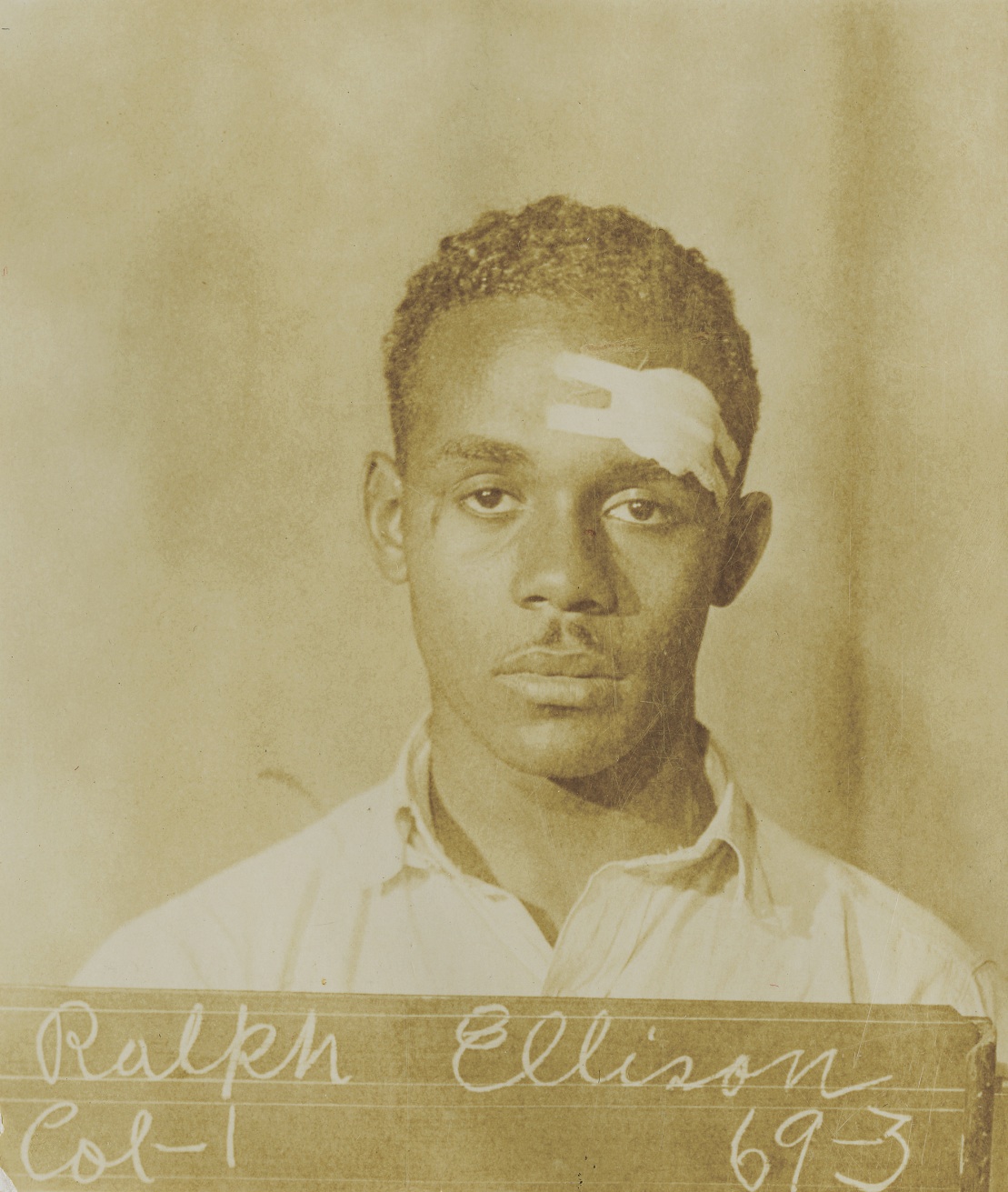
Anyone else feeling a Ralph Ellison moment coming on? I do:

I am an invisible man. No, I am not a spook like those who haunted Edgar Allan Poe; nor am I one of your Hollywood-movie ectoplasms. I am a man of substance, of flesh and bone, fiber and liquids – and I might even be said to possess a mind. I am invisible, understand, simply because people refuse to see me…When they approach me they see only my surroundings, themselves, or figments of their imagination – indeed, everything and anything except me…That invisibility to which I refer occurs because of a peculiar disposition of the eyes of those with whom I come in contact. A matter of construction of their inner eyes, those eyes with which they look through their physical eyes upon reality… It is sometimes advantageous to be unseen, although it is most often rather wearing on the nerves…you often doubt if you really exist. You wonder whether you aren’t simply a phantom in other people’s minds. Say, a figure in a nightmare which the sleeper tries with all his strength to destroy. It’s when you feel like this that, out of resentment, you begin to bump people back. And, let me confess, you feel that way most of the time. You ache with the need to convince yourself that you do exist in the real world, that you’re a part of all the sound and anguish, and you strike out with your fists, you curse and you swear to make them recognize you.”

So why do people Riot? Remember Ralph, they’re bumping back. Notice for Black folks that riot: stop tearing up the community. This morning on NPR there was actually an interview of a teenage boy who was a rioter on Monday and on Tuesday he was cleaning up his neighborhood because he realized how ineffectual it was to do so–but you probably didn’t hear that in a number of conversations about these riots. I live in a predominantly Black community and I grew up in a predominantly Black community, raised by a protesting hippy Black person and here’s what I know about Riots. Why are we burning up where we live? Almost all spiritual practices inform us that there is a deep connection between how one sees their community/environment and how one sees themselves. To be connected to environment and this communities where we live means that we are less likely to liter…most of us wouldn’t just drop trash on the floor in our house, but feel very comfortable dropping it on the street outside a building. If one feels ok to litter, it isn’t a far leap from that to throwing a garbage can through the window of a local business. The person littering does not see a connection between themselves, their well-being and the environment around them. As folks in Baltimore continue to work as a community to clean up their community my prayer is that it goes beyond the riot clean up. Maybe we all can gather our neighbors and take a walk down the block to pick up the trash around us to feel more connected to our streets. Maybe we all can be those annoying old Black women who yell at us when we are doing something wrong and set us back on the right path (maybe we can sound a little less miserable when doing it).If you know community organizations or groups that are already doing this work (I hate when we reinvent the wheel), shout them out so folks can sign up.

How can we help folks see themselves as integrally connected to their immediate environment?

If we can’t solve that then so many of the issues I listed above will continue to devastate communities that are already at the margins of society.

We should care that Joseph Kent got arrested, we should care that Black folks were rioting and destroying their own community, but we should also care that there were even more folks coming out to clean-up and rebuild and stop the violence as it erupted and we should care even more about why these riots were happening in the first place.

This Sunday’s Sermon Preview

Please note that this will be read, so punctuation is probably horrible.

Coming out.  We often think about “coming out” stories as experiences where one finally announces their sexuality to the world. I know a lot about coming out. As a Black single woman who loves wearing clogs and has no children I’ve had to come out as straight a lot. Yes I’m straight, I do still hope you will love me anyway. When I lived in predominantly White communities, people assumed that my single status must have been because I was a lesbian. It couldn’t have possibly been because White men just never asked me out on dates or the number of straight men of color was so small that I had either dated all two of them already and it didn’t work out or just didn’t want to date them at all. The important thing to know about coming out is it only happens when there is an assumption about what is/is not “normal.”
My friends from the LGBTQ community often speak of coming out as a process. At one level the person comes out to themselves and understands who they are. Little by little they start to let others know about their sexuality. As an experiment for my straight folks in the room, try never talking about your sexuality. For example, having a conversation with your best friend about someone you are dating and how amazing the date went, but not mentioning their gender. How hard would that be? Sometimes I like to do this to friends or family. Yes, I really like people who make me laugh. Just went on a romantic date with this person who’s just so amazing. That person is a great kisser and we just really enjoy each other’s company… It’s kind of awful, to not fully speak about this person that is making you happy. That’s what life in a closet looks like. To spend your life hiding some integral part of your story can be extremely painful and lead folks to dark places. Eventually one must choose between the consequences of living in the closet or stepping into the unknown. Merriam-Webster Dictionary says that coming out is to come into public view: make a public appearance, to become evident. To come out is to be in the light. In many ways coming out these days is often a less stressful process than it was even 10 years ago. I see teenagers of what I assume to be the same gender holding hands all the time and it really isn’t a big deal. This doesn’t mean that things are fine, but it really is getting better. Now a days coming out is something a lot of people do around a variety of things. The other day, I had a co-worker say, “ok, I’m coming out as a football fan.” You see he is a pretty liberal hippy type. He loves a wine bar and intellectual discussions about cheese. This is not someone you think would love a sport known for its brain injuries. Folks say that they are coming out in multiple ways, like ok, I’m coming out as bacon lover, I’m a closet vegetarian, I’m coming out as a smoker.
“Coming out”, really means being vulnerable enough to let you know my true self. I’m allowing you to know the person I am often not willing to share with others. I’m going to tell you about the person I have had to hide in order to make you comfortable in my presence. In other words, coming out means stepping into my truest whole self no matter how wonderful or how painful the consequences might be. Here’s the thing, holding back that truth can have devastating consequences and wonderful rewards. Often when one takes the leap they realize that they are stepping out of darkness and isolation. Revealing our secret self will allow us space to finally connect with someone who might be like us or at least understand our story. We come out to connect and fully be ourselves despite the pressure to do otherwise. So what does this have to do with Jesus?
These past couple of weeks we have been hearing readings about Jesus’ coming out story. We call it the season of Epiphany. This is a time when Jesus begins to reveal his divinity and experiment with what it means to be this divine human or for short hand “God-Man”. Epiphany is defined as an illuminating discovery, realization or disclosure and doesn’t that seem to sound a lot like coming out? In these few weeks between Christmas and Lent we see Jesus step into the truth of his identity to fully embrace it regardless of the consequences. Last week Jesus was in the synagogue revealing that there was something different about himself, he is challenging authority and then casts out a demon. They all wonder, “Who is this man and why can he do these things that we can’t?” Jesus starts to assemble his crew of allies; we like to call them disciples. They will be the people that have his back. They become the group Jesus can be true with. He can fully express his hopes about what revealing this “God-Man” identity is going to be like, fear what he will go through and what he will eventually die for.
Imagine this, you are growing up in Palestine just like everyone else and then you come to realize that what is going on inside of you, is not the norm. You can cast out demons and heal people, you are God… Do you really want everyone to know this? Should you really come out?
So this week, Jesus makes another step closer to revealing his identity. He shows up at Simon’s house, Simon’s mother-in-law is sick so he touches her and she gets up starts cooking them dinner. Then the disciple allies start outing Jesus and bring the neighbors by. Jesus starts healing like an episode of Oprah Show. You get a healing, you get a healing, and you get a healing, everyone gets a healing. Interestingly enough though, Jesus doesn’t let the demons speak because, “they knew him”. He is willing to come out as a healer, but letting folks know that he is “God-Man”, not so much. Eventually Jesus must embrace his humanity, he gets tired and overwhelmed and must find a place to recharge so that he can step further into his truth and be prepared for the work God has given him to do. In  Verse 35 we see “in the morning, while it was still very dark, he got up and went out to a deserted place, and there he prayed.” When you are coming out, do yourself a favor and find private time for yourself to renew and uplift your spirit talk to God about it. Luckily for you it is almost lent a fabulous time to sit in the dark early morning and pray a bit. But I digress. After Jesus prays, his disciples come looking for him, his allies would not let him simply stay in that quiet place and hide from his destiny. And they say what I think is the true good news, “everyone is searching for you.” Listen to that again. EVERYONE IS SEARCHING FOR YOU.
There is a gift, a talent, a truth about you that maybe you have been hesitant to share with others. There is a story about your life that you have hidden from others for fear that it will make someone else uncomfortable or for fear that you may be harmed. But we are searching for YOU! YOU, the real true you. Now, I’m not saying you need to tell everyone your business, Jesus didn’t. So my challenge is this, what secret about your true self have you hidden from others? For example, I once had a student whose family was in a deadly car crash just before the semester started. He lost two siblings and a parent. All I wanted to say was I am holding you in my prayers, but I held back. The school I worked at was a public institution and many of my students didn’t hold spirituality at the front of their identity and so in an attempt to not offend I was holding this feeling inside. After 30 minutes of talking and figuring out how I could support him, I broke down and said: “I don’t know what you believe, but I just want you to know that I am holding you in my prayers and even God can’t explain why you are going through this difficult time.” Immediately the student broke open and cried and then we spent another hour talking God and how his faith was present in all of this tragedy. After that the word was out and my office became a safe space for many students who wanted to talk about their faith and spirituality. By coming out as Christian, I was able to allow others to come out about their spiritual practice as well and build deeper relationships. Coming out made me better at my job and a better human.
In Brene Brown’s Book, “Daring Greatly,” she says, “Rather than sitting on the sidelines and hurling judgment and advice, we must dare to show up and let ourselves be seen. This is vulnerability. This is daring greatly.” Jesus is our Lord and savior for many reasons, but for me, this is it. Jesus came out and it was hard and it was painful, but he did it, he cloaked himself in vulnerability and showed up so that he could be seen. Jesus found himself in a community of people who needed him to come out, they needed his hidden gifts, for this was the door to liberation. Jesus shared this gift, came out and stepped boldly into his divinity.
Everyone is searching for YOU! Come out, come out wherever you are.