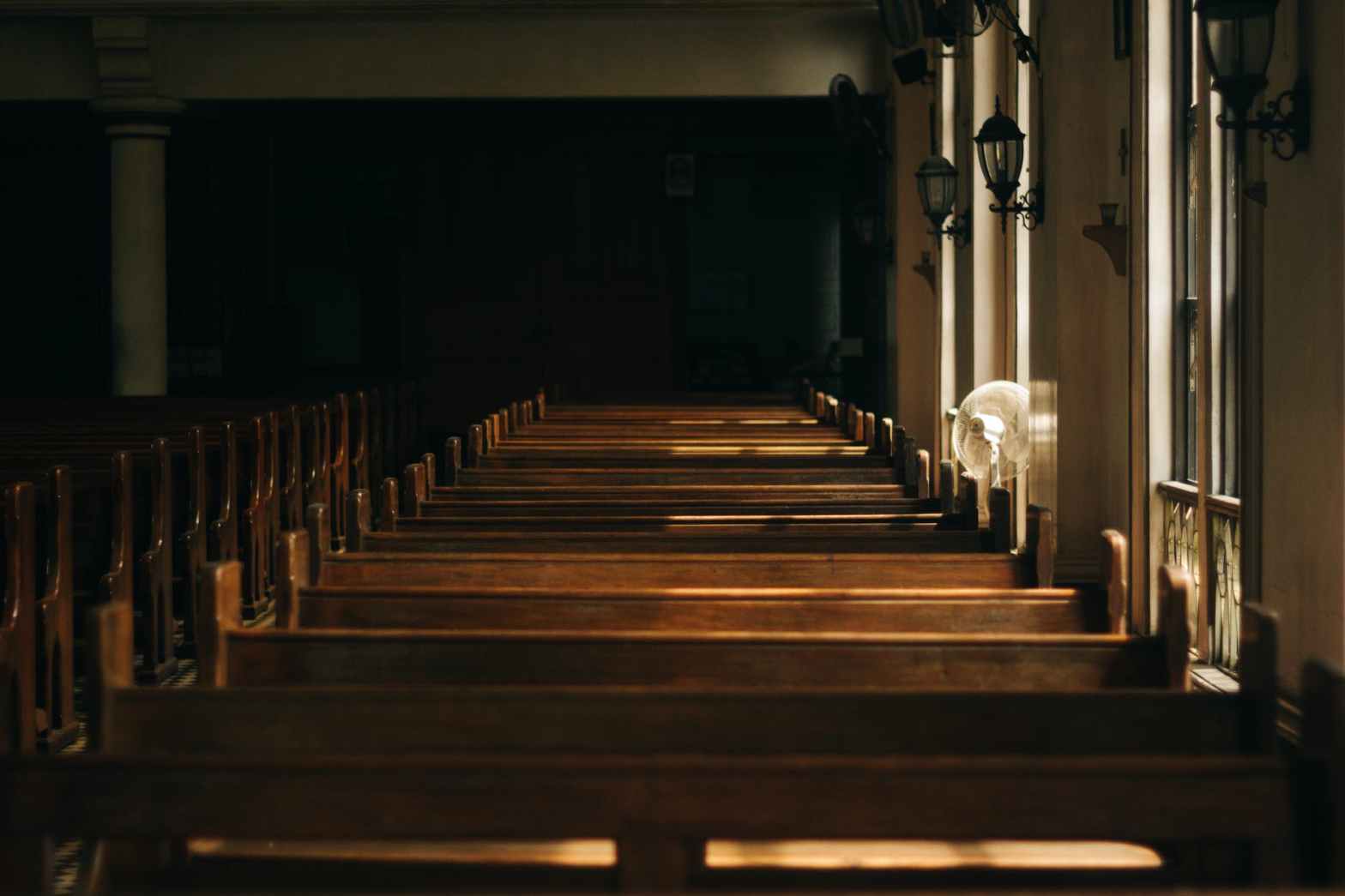
Since graduation this blog and website has become a way for me to continue exploring the questions I started to investigate in seminary. As a part of this process, I have been looking back at past posts. As I reviewed them, I realized that not only have I been wondering what is the church, but where is the church? I have been questioning what we mean by communities of God for my whole life and it affected the way that I understood my ministry. Here is an excerpt from my thesis that explores the role of the Public priesthood. It assumes a new way of imagining not only the role of the priest, but what we understand as and where we see the Church.
The limitation of academic positions has made the role of Public Theologian necessary. Graduate theologians have had to figure out ways to share their acumen and maintain financial stability. Therefore the role of Public theologian comes out of economic necessity and a deep ceded desire to make theology accessible. The role of the Public theologian is to bring theological insight to the masses. Priests are experiencing similar limitations in the traditional congregational context. The Public priest would bring sacramental life to the masses. Many may see this proposed role as similar to that of deacon or chaplaincy. However the deacon is really a bridge between the church and the world and chaplains often are formed out of the same ordination processes that limit ministerial imagination. What I propose is an ecclesiastical role that recognizes the church as the world. The goal isn’t to fill pews and buildings. Rather, the role is to recognize the incarnational in the world and participate with it through sacramental life, administered by the Public Priest.
According to Brown and Cocksworth, “there is no such thing as an ‘absolute ordination,’ a conferral of position in the Church abstracted from the realities of service within a local community of Christians.”[1] However, we must problematize what we mean by “local.” Many priests are ordained in one context and yet end up serving in completely different locations. And there are others who serve in spaces that are not predominantly Christian. These examples mean that we may already be a church of “absolute ordination,” we just need to embrace it! Such an embrace does not mean that everyone will be ordained or that public priests would not be held accountable by a community. This role would have accountability to the denomination, but freedom to discern out of a variety of contexts.
We must deal with the reality that our concepts of church, community, and local have been problematized by technology, economics, pandemic and migration. From my apartment in Brooklyn, I could go to bible study in Jamaica, Sunday Morning service in Washington, DC and evening prayer at a camp in Connecticut. Most of my friends don’t go to church at all, even those employed by it. My spiritual, but not religious friends have made me their default chaplain because I publicly say I’m Christian. When they are having crises or a desire for rituals to mark life’s important moments, they ask me to help. I have moved often for work and these friends live throughout the country. This displaced group of friends feels like my church community. Additionally, those disillusioned by church limitations are realizing that they don’t have to enter particular doors to experience God’s belovedness. This is particularly true for those engaged in social change movements.
Patrisse Khan-Cullors is known as a leader in the #BlackLivesMatter movement. Her memoir offers theological insights into how we might understand Public priests. In her story we see the ways that various community groups, educational institutions and friend networks provided space for her to develop lifegiving God-talk. Her description of family barbeques sounded like the parish picnics of my childhood. The ways that her chosen family shows up for each other is similar to the ways that I access my community of care that is rooted in the church. Most touching are the stories about her relationship with her biological father: “In a world that has made Black humanity invisible, I feel seen in a way that is almost shocking.”[2] As she talks about organizing her father’s funeral, it is “the first time I have ever called community together to acknowledge a life.”[3] And it will not be her last.
These seemingly secular spaces become training grounds for Khan-Cullors like church basements had been for John Lewis. While today’s leaders often say, “this is not your grandmother’s civil rights movement,” in many ways it is. Instead of church basements its non-profits (and it is also church basements). Instead of hymns like “we shall overcome,” it is Kendrick Lamar’s “we goin’ be alright.” At the root of modern movements and those that came before is a theological center on the beloved worthiness of those who have been deemed unworthy by institutional structures and from those who benefit from the existence of such structures. The Episcopal Church has been on a journey to correct their involvement and support of oppression and we are doing so by developing God-vision when we move through our communities. One possible tool to help in this process is Public Priesthood.
This past summer I swam in some of my favorite New Hampshire watering holes, it was an opportunity to remember what was written in my rejection letter from the Commission on Ministry so many years ago, “the ministry to which you feel called is not one priesthood would prepare you for.” They told me to come back in ten years. I read the letter as code for, “go grow up and figure out what priesthood is really about.” Almost ten years later, they may be right.
The structures that currently exist were not created for people like me and how I understood my priestly call. While there are generations of priests that understand their ministry in “the streets” there are others for whom church polity and ritual is their ministry. I am not proposing either/or, I am Episcopalian, I am proposing both/and. The stories of the women I interviewed speak to ways that Church tradition has something to do with social change and that social change has something to say to our tradition. According to Spellers, “Anglicanism can and should always balance the ancient and the contemporary, the catholic and the vernacular. We call this middle way, the via media, and it allows us to rejoice in having unity without uniformity.”[4]
What happens in ordination processes matters because who we call as leadership matters. The work we have to do is not just about policy and structure. People are crying out for love, attention, support and caring presence. Our work, as the church, should be where “the Word of God gathers and is incarnated in the community of faith, which gives itself to the service of all.”[5] The Church exists to participate in “the fullness of liberation,” which is “communion with God,…other human beings,” and the rest of creation.[6] The church is being called into forming leadership that can support communities where true liberation can be practiced, where true liberation can happen. Thanks be to God. Alleluia, Alleluia!
[1] On being a priest, 21. Emphasis mine.
[2] Khan-cullor, pg. 95. We can see the parallel between these words and the ways that Bishop Emma spoke about her Black church experience growing up in the 50’s and 60’s.
[3] Ibid, 106.
[4] Spellers, The Church Cracked Open, 57.
[5]Gutiérrez, 7.
[6] Gustavo Gutiérrez, A Theology of Liberation: History, Politics, and Salvation (Maryknoll, N.Y: Orbis Books, 1988), 24.
 Pursuing Call